

The transformative power of reconnecting injured and orphaned animals with their natural habitats
By Joan Conrow

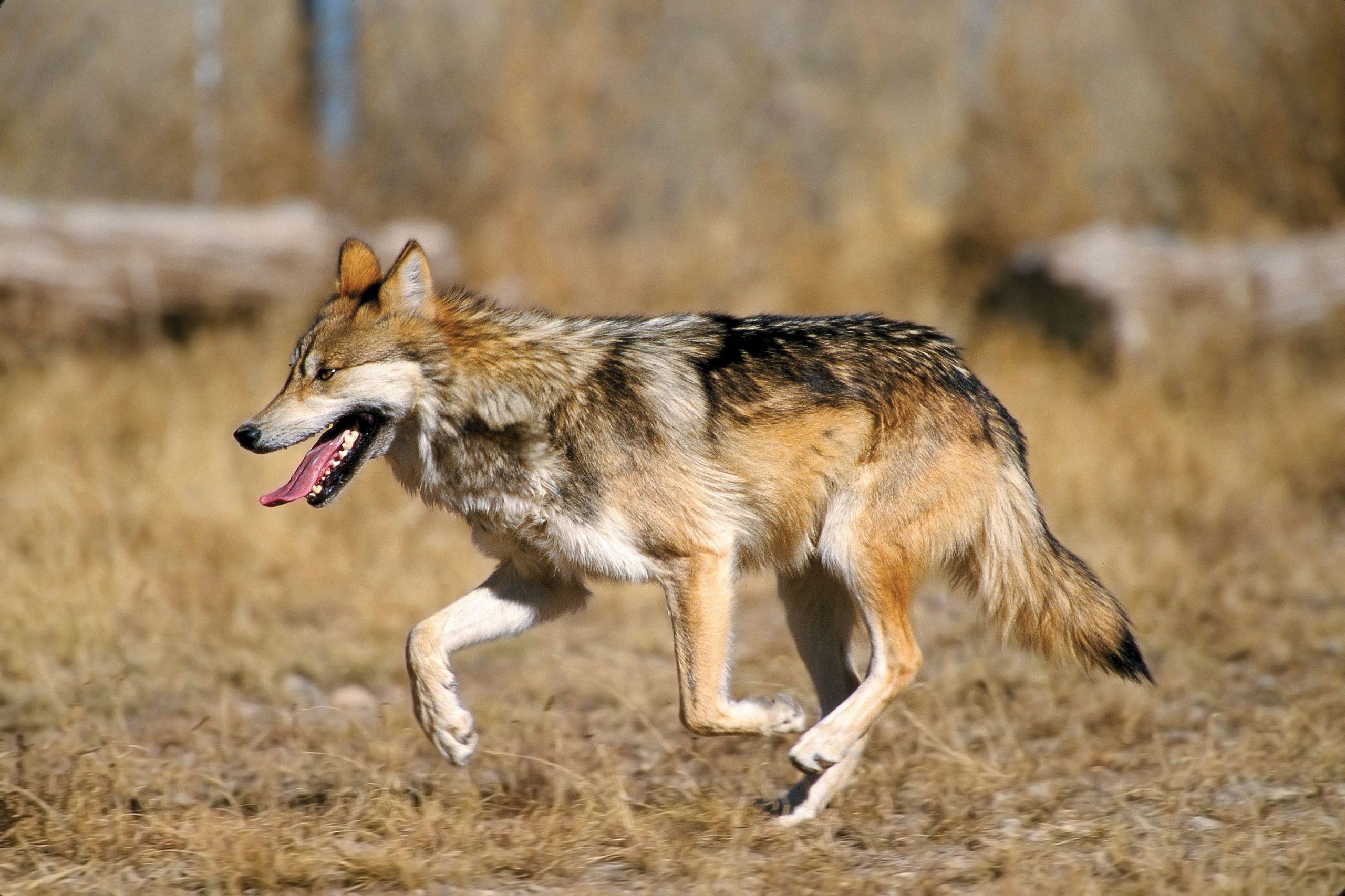
The Aztec god Xolotl may have been based on the Mexican wolf, not a dog as previously believed.
On a typical Monday afternoon, Lori Paras makes the 112-mile roundtrip from her home in El Rito to Santa Fe to pick up a fresh supply of live rats. Unless she can delegate the task to a volunteer, it is a trek she simply can’t postpone or miss. The eagles, hawks, owls, and other birds of prey in her care at the Santa Fe Raptor Center depend on those rodents—raised by “the Rat Man”—not only for food, but a chance to practice the hunting skills critical to their ultimate release.
Paras is among a small but dedicated cadre of Northern New Mexico residents who go to great lengths to ensure a second chance for injured, orphaned, or, in the case of prairie dogs, beavers, and the critically endangered Mexican gray wolf—el lobo—maligned wildlife.
Though they work or volunteer for different organizations, these wildlife champions and caregivers are guided by the shared tenets of rescue, rehabilitate, and release: returning a healthy animal to the wild is the ultimate goal. They are similarly joined by the deep awareness, understanding, and belief that wildlife—from the lowly toad to the mighty eagle—matters.
“More and more—globally, nationally, and regionally—we’re recognizing we’re just a small part of a web of life that has been evolving for millions of years,” says Leia Barnett of WildEarth Guardians, a Santa Fe-based organization working to protect and restore the wildlife and wilderness of the American West. “We can’t be so ignorant and arrogant as to assume we can remove parts of that web without dire consequences.”
Paras cites the symbiotic relationship between prairie dogs and burrowing owls as one striking example of that web. The small owls are given a place in active prairie dog holes, and the two species warn one another of predators. Burrowing owls can mimic the sound of a rattlesnake to scare off badgers, while prairie dogs maintain sentinels atop the burrows, raising the alarm when predators draw near. “Prairie dogs are not loved but they’re an important food for eagles and hawks and they improve the soil by aerating it,” she explains. “And the owls need their burrows.”
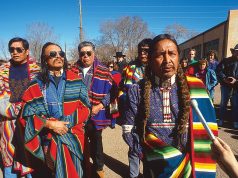
Many Native Americans, including the Pueblo Indians of the American Southwest, have long embraced a worldview that values the concepts of interconnectedness, respect, and reciprocity—a belief system that extends to animals. Aside from providing food and clothing, many animals had special ceremonial and ritualistic powers as family members, teachers, and messengers, and they were considered equal to human beings in a complex web of life. As a quote attributed to the late Russell Means, a member of the Oglala Lakota Nation, observes, “If all our relatives who crawl and swim and live within the earth were taken away, there could be no life. But if all the human beings were taken away, life on Earth would flourish. That is how insignificant we are.”
Though humans may be insignificant in the overall scheme of things, they pose an outsized, if typically inadvertent, threat to wildlife. Most rescued wildlife are the victims of human-caused harm: collisions with cars, barbed wire fences, and windows; ingestion of poison bait or lead shot and sinkers; attacks by pet dogs and cats; disruption of their natural habitat. Wolves may be killed for habitually preying on livestock or captured and relocated if they roam past state lines or Interstate 40—a boundary designated by federal officials as the northernmost range of the lobos, which now inhabit only southwestern New Mexico and Arizona.
“Wolves don’t know political boundaries,” Barnett asserts. WildEarth Guardians advocates for letting wolves roam, primarily so they can find mates to help broaden the genetic bottleneck that leaves the small population vulnerable to disease. Though lobos once numbered in the thousands, they were nearly eradicated by the mid-1980s, with just seven animals left to restore the species. Their offspring have been slowly reintroduced to the wild, but aside from the genetic limitations, the species face “coexistence issues with the cattle industry,” Barnett says.
When northern gray wolves were returned to Yellowstone, she explains, just 20 percent of their original reintroduction area was grazed by cattle. Lobos face much tougher odds, as they are released primarily onto public lands heavily used for ranching. “Yellowstone was a success, and wolves in New Mexico and Arizona continue to suffer,” she says. “We’ve done a lot of polling, and the majority of New Mexicans love lobos and want to see them fully recovered in the landscape. But the cattle industry has an outsized voice that is loud and fear mongering.”
The 2025 wolf census counted 286 lobos in Arizona and New Mexico, including Asha, who was twice captured by New Mexico Fish and Game on behalf of the U.S. Wildlife Service for traveling north of I-40. The first time she was caught she was relocated further south. The second time she was held in captivity until she bred, then released into the wild. “We were advocating for Asha to be free to roam from the get-go,” Barnett says, noting the organization also opposed the recent relocation of Taylor, a Northern gray wolf that wandered into New Mexico from Colorado, apparently seeking a mate. “Let the wolves roam where they need to roam.”
While WildEarth Guardians takes a multipronged approach that includes legal action, political advocacy, and land protection, the New Mexico Wildlife Center in Española focuses solely on rehabilitation and education. The center cared for some 1,000 animals from 160 different species in 2025, says Executive Director Matthew Miller. About 70 percent were birds, but other patients included a tarantula, a butterfly, two baby bobcats, and a coyote with a severe case of mange. “We literally never know what’s going to be brought through the front door,” Miller says. They even rehabilitate skunks and bats, the only organization in the state to do so. About 80 percent of the animals they treat are rescued by the public, with the remainder transferred from other organizations, municipal animal control, and Tribal, state, and federal wildlife agencies.


Clockwise from left: Pepper, an ambassador raccoon, moves through his enclosure at the New Mexico Wildlife Center; Caroline Cohen, a wildlife rehabilitator at New Mexico Wildlife Center, tends an injured bird; this peregrine falcon got a second chance at the Santa Fe Raptor Center and was released after recovering from his injuries; Juniper, a gray fox illegally taken from the wild as a kit, will live out her life at the New Mexico Wildlife Center.
“It’s very exciting work,” says Izzy Willard, a Santa Clara resident who interns with the center. Willard, who graduated from Colorado State University in May 2024, is considering a career in wildlife work, so she was thrilled to land the position in the fall of 2025. “I like being here, learning about the animals I live around, getting up close and personal, and making them feel better.”
With its fulltime veterinarian, advanced X-ray and surgical center, intensive care unit for raptors, diagnostic lab, state-certified pharmacy, numerous enclosures, the center is well-equipped to meet the medical needs of its patients. But staff face different challenges than a typical veterinary clinic because the clientele is wild and must stay that way. De-stressing the animals is a crucial element of care, Miller says. “They don’t know we’re trying to help them. They think of us as a predator. We don’t cuddle them, name them, coo at them. We joke, ‘they hate us, but that’s great.’”
Though rehabbers strive to maintain the distance needed to ensure their patients are successfully returned to the wild, the work can take a heavy personal toll. Mortality rates are high among injured wildlife, especially in the first 24 hours, and providing intensive care is physically demanding. At the Wildlife Center, baby birds may need feeding every 15 minutes, and Paras regularly tends eagles that could rip off her nose with their beaks or break her arm with the force of their talons. And then there are the federal and state regulations that must be learned and followed, plus the annual reports, site visits, and reviews required by permitting agencies. “Sometimes it seems almost impossible, but that’s the caliber of our staff,” Miller says. “Burnout is real,” adds Anna Tobin, director of the New Mexico Wildlife Center’s ambassador animal program. “A lot of times you just grit through because of the animals. But we put in a lot of effort to make sure it’s a healthy workplace with a healthy environment. We want people to enjoy being here.”
The primary concern, however, is the animals’ well-being. Every patient has its own medical chart, as well as a personalized plan for exercise and enrichment that is regularly re-evaluated. On a recent visit to the Wildlife Center, Pepper, a rescued raccoon who can’t be returned to the wild, was walking around on paint poured on paper, an enrichment exercise that lets him experience different textures on his feet. His resulting creations are sometimes sold in the gift shop. For other animals, food may be hidden beneath branches or served in unusual containers that prompt exploration and discovery. “They need novelty and stimulation to stay mentally and physically engaged,” Tobin explains. “We always try to optimize choice and control of their surroundings. We give them the ability to influence their environment.”
As one example, the center built an aquatic species enclosure featuring a 6,000-gallon water tank with various hides, perches, shelters, and basking areas that appeal to its inhabitants. Miller and Paras say they often reconfigure existing enclosures to best serve the needs of their changing clientele.
Santa Fe architect James Horn is enjoying the challenge of planning a 10,000-square-foot wildlife recovery center at the Living Desert Zoo and Gardens State Park in Carlsbad that can accommodate a wide range of animals, from reptiles and birds to bears and elk, as well as the infrastructure that supports them. That includes ensuring sufficient room to bring in containers holding live cargo or food and creating transport corridors that allow animals to be moved without encountering other creatures.
Horn says the project fits well with the firm’s overall emphasis on modern regionalism, historic preservation, and landscape. Though Spears Horn Architects has not previously designed shelter specifically for wildlife, it has drawn up plans for many equestrian barns and dog runs. Horn further relied on personal experience gleaned from playing bluegrass banjo for festivals at the Wildlife West Nature Park in Edgewood, which houses non-releasable wildlife native to New Mexico, and visiting zoos. He also learned about animal shelter and behavior when his children, now grown, raised chickens and bees, as well as pigs for 4-H.
To gain insights into the specific requirements of wild animals, Horn is consulting with a zoo architect in Seattle and New Mexico parks rangers, whom he describes as “extremely knowledgeable.” For instance, he was advised to make sure wildlife wouldn’t be looking at glass doors, which could trigger a desire to escape, and that hoofstock, like elk, need a lot of clearance because they can rear and jump very high.
“I am planning to do simulated rusted metal, insulated concrete, and other cleanable, sprayable, durable materials,” he says. The architectural firm is also proposing a design that retains the indigenous flora, with no imported plants, and avoids “a gentrified look” in the landscaping and signage. And since the facility will not be open to the public, the design will blend in with the natural environment. Horn, who fell in love with “the beautiful Chihuahua Desert landscape” as a child, says he is very excited about this opportunity. “It’s not about making a big splash with the building, but how to fit in,” he says. “It’s really for the recovery of animals, which I appreciate and support.”
Rehabbers typically seek to replicate the life an animal would experience in the wild. “I’m always trying to imitate nature as close as I can,” Paras says. “I will have people find a baby owl and say, ‘I can raise it myself,’ and I say, ‘No, you can’t. They need bone, gut, fur, feathers to be healthy. If you’re feeding it hamburger, you’re killing it.’” That’s where the rats come in.
Food is a big-ticket item for these organizations, which are funded entirely by caring citizens and small grants. At the Wildlife Center, the menu may include mealworms, crickets and other insects, fresh produce, some commercial food, and frozen mice, rats, and chicks. Paras spends about $30,000 per year, while Miller supplements his budget with donations from Beck & Bulow, a butcher in Santa Fe, as well as wild game from hunters and fishers and fruit and vegetables from home gardeners.
Diet, like enrichment plans and medical care, is highly personalized. Though it’s challenging to figure out exactly what an animal needs, rehabbers find it highly rewarding. “Every bird that comes in here has a unique personality and issues,” Paras says. “It’s a troubleshooting thing. I love being flexible and willing to learn.”


Though nearly all wildlife rescue work in New Mexico is done by nonprofits and volunteers, the state contracted with Spears Horn Architects in Santa Fe to design these plans for a new wildlife recovery center at the Living Desert Zoo and Gardens State Park in Carlsbad.
Tobin agrees. The field of wildlife rehabilitation is rapidly advancing, she says, leading to greater understanding of how to assess an animal’s quality of life. Notes Miller: “We’ve learned so much about stress levels and chronic pain.” That awareness has led to more rigorous assessments of when humane euthanasia is preferable to a life in human captivity, which itself is a stressor. “Anthropomorphizing is one of the biggest risks to wildlife, pushing our own needs and expectations on them,” Tobin says. Even doing something as seemingly innocuous as petting a white-tailed deer could cause the animal to die of stress, she cautions.
At both the Raptor and Wildlife centers, some animals, like a peregrine falcon with a damaged wing named Horus, and Juniper, a gray fox illegally picked up as a kit by people who mistook it for a Chihuahua puppy, can’t be released in the wild. They may become animal ambassadors, helping to educate school children and adults about New Mexico’s unique wildlife, or serve a vital role as foster parents, modeling behavior that can help orphaned animals learn critical survival skills like pouncing and stalking.
Education is key to protecting wildlife, their champions agree, and it can start with simply noticing the animals that share our world. This can lead to helpful measures like avoiding the use of poison and glue traps, putting deflectors on windows to prevent bird strikes, minimizing outdoor lighting, keeping pets under control, and growing native plants instead of a lawn. If an injured animal is found, keep it quiet, don’t give it food or water, and call a wildlife center for help, they advise.
Though these wildlife advocates face many obstacles, they are driven by a strong sense of purpose and their affinity with animals. “I wanted a job where the emphasis was on life with a capital L,” says Barnett, who recalls grasping “the inherent sentience and importance of this species” while watching three lobos trot through her camp in the Gila Wilderness. “I feel like I’m working for something much bigger than me.”
While the toughest part of Miller’s job is telling a person the animal they rescued didn’t survive, he finds real joy in “seeing that light bulb go off when people make that connection to the natural world and learn new things. And it happens with kids all the way up to senior citizens.”
Paras, who abandoned a desk job for wildlife rehabilitation 26 years ago, is still brought to tears when she recalls the first time she felt an eagle’s heartbeat while assisting in its care. “Some energy spun through me, and I’ve never been the same. The day I don’t feel that same awe is the day I need to quit. And that’s not happening any time soon.”

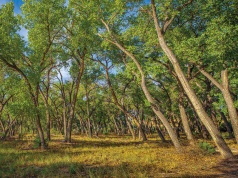
The Gila Wilderness and National Forest in southern New Mexico provides critical habitat and a rare safe haven for the endangered lobo.
From the Summer 2026 issue