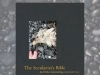
At Maya Gallery Dos, Carl Bork’s paintings become the setting for a performance built from narration, music, light, and a little childhood imagination.
BY BRETT E. TRUSKO
Upstairs at Maya Gallery Dos, roughly 50 guests will take their seats among Carl Bork’s paintings. Then the lights, music, and recorded voices will draw them into a Western. When the 90-minute presentation ends, they can walk back through the gallery and look at the canvasses again. The Gunpowder Trail gives each painting a place in a larger story without taking away its life as a work of art.
The story follows John, a deputized horse farmer in the 1880s who heads west after his uncle is murdered. His pursuit of the killer brings him unlikely companions and an encounter with a criminal syndicate led by a gunslinger called the Deuce. There are gunfights and hard choices, but the project began with a simpler impulse. Bork wanted to paint the kind of Western action that seized his imagination as a child.
He had been showing colorful, thickly painted landscapes at Maya for six or seven years, according to Eric Swerdloff, who has helped organize the Santa Fe presentation. Those works found an audience, but Bork wanted to step away from the familiar approach. He joined forces with childhood friends, including writer Victor Geremia, and the paintings became the basis for a narrative and an illustrative book. What began as a passion project in 2021 took several years to develop into a show, Swerdloff said.
The result occupies an unusual place between gallery exhibition, audiobook, and picture show. The original works will hang around an upstairs room set for roughly 50 seated guests. Recorded actors carry the story; project imagery, lighting, and music add another dimension. Swerdloff is arranging a DJ whose soundtrack will bring a contemporary pulse to the western atmosphere. He describes the desired feel as a Spaghetti Western with a modern beat, rather than a faithful recreation of one.
The cast extends beyond a single storyteller. Justin Greathouse voices John and several characters’ James Dorton plays the Deuce, while Heather Blackburn voices Angela Williams and Revere Lawrence plays young John. Jacob Ames contributed as the cinematographer. Their performances are recorded, so the live encounter is with the paintings and the room rather than actors at microphones. Swerdloff wants the sound and light to evoke the pleasures of an old picture show without pretending that this is one. Even the suggestion of a projector reel, he said could draw on a memory many viewers recognize.
That distinction matters. Western art in Santa Fe can arrive burdened with expectations about landscape, nostalgia, and authenticity. Bork’s paintings offer the familiar hats, horses and open country, but their color and paint handling invite a closer look. Swerdloff points to Bork’s use of light as the thread connecting his landscapes to the new narrative. Paint catches and changes with the room’s illumination and with the viewer’s position. The work asks for time even when the plot is moving forward.
One image Swerdloff returns to shows men talking around a campground. The fire lights their faces, yet their expressions leave the conversation unresolved. A visitor can invent a story from that one painting without knowing a word of the script. For Swerloff, that is evidence that the work succeeds on two levels. “The paintings will stand on their own,” he said. The performance supplies a narrative, but it does not exhaust what a viewer might find in an individual canvas.
He has seen that curiosity in the gallery already. A selection of the works has hung there before the complete Santa Fe production, and visitors have stopped to ask what the characters are thinking. Some paintings have sold. The chance to move from a single scene to the larger story is part of the exhibition’s appeal: a collector may take home one moment, while the audience can follow the journey that connects them.
Swerdloff has been working with Bork to make this showing more than a screening in a room with art on the walls. He expects the evening to begin with a Western-themed welcome and hopes to add live performers and refreshments that extend the atmosphere beyond the presentation itself. Some productions details were still being assembled when the TREND spoke with him, and he had yet to see all the Santa Fe elements together. That uncertainty is also part of mounting a show that does not fit neatly into a gallery’s usual opening-night routine.
After the presentation, guests will be able to roam among the paintings and speak with Bork. The book will be available for signing. The arrangement changes the usual order of looking at art: first a story gives the figures names and stakes; then the audience returns to the canvases with its own questions. Swerdloff does not intend to rush people out. The conversation after the show may prove as revealing as the performance itself.
The project has roots in Salida, Colorado, where Bork became interested in local Western history and where an earlier version was presented. Santa Fe brings another kind of audience to it, people accustomed to Western imagery, but also seeing artists test its possibilities. Swerdloff hopes visitors leave with something less easily measured than an opinion about genre: “a return to childhood wonder.” That may be the best reason to put paintings, voices, and music in the same room. They offer grown-ups permission to follow a story into the dark, then come back and look again.
Swerdloff hopes visitors leave with something less easily measured than an opinion about genre: “a return to childhood wonder.”
WHERE & WHEN
The Gunpowder Trail is scheduled at Maya Gallery’s event space, 130 Lincoln Avenue, Santa Fe.
Thursday October 8, and Friday, October 9, at 7:30 p.m.: Saturday, October 10, at noon and 7:30 p.m. Guests are asked to arrive up to 30 minutes early.
Tickets are $19 with a signed 8-by-10-inch print or $60 with a single illustrated hardcover book (The $60 listing also describes a signed print).